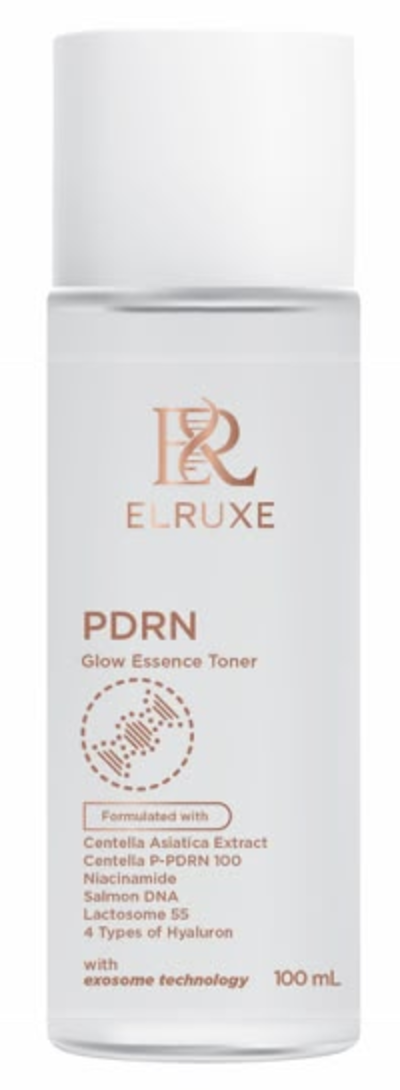
If you've spent any time on skincare TikTok this year, you've heard of PDRN. It's the ingredient behind "salmon facials" in Korean clinics — and it's now finding its way into daily routines.
What PDRN actually is
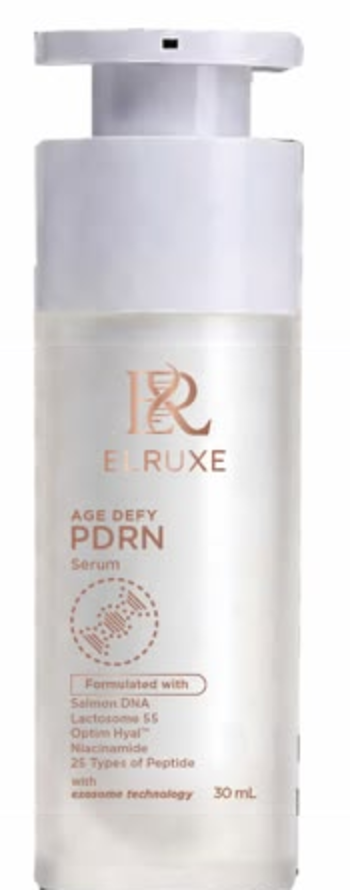
PDRN stands for polydeoxyribonucleotide — a chain of DNA fragments. In skincare, it's most commonly sourced from salmon, whose DNA is structurally similar to our own. Applied topically, it supports skin that looks healthier, calmer and more resilient.
Think of it as a care ingredient rather than a quick fix: it works quietly in the background, alongside hydrators and barrier-support actives.
"We built every ELRUXE formula around DNA — then made it light enough for Indonesian weather."
Salmon DNA vs Centella P-PDRN
Not all PDRN comes from fish. Centella P-PDRN 100 is a plant-derived version from Centella Asiatica, the same herb known for its soothing properties. We pair the two: salmon DNA for care, Centella P-PDRN for calm.
Why exosome technology matters
An active is only as good as its delivery. Exosomes — in our case, Lactobacillus extracellular vesicles — are tiny carriers that help ingredients travel into the upper layers of the skin, where they do their work.
How to use PDRN at home
Keep it simple. Tone, treat, seal — morning and night, after cleansing:
- Tone — pat Glow Essence Toner over face and neck.
- Treat — press in 2–3 drops of Age Defy Serum.
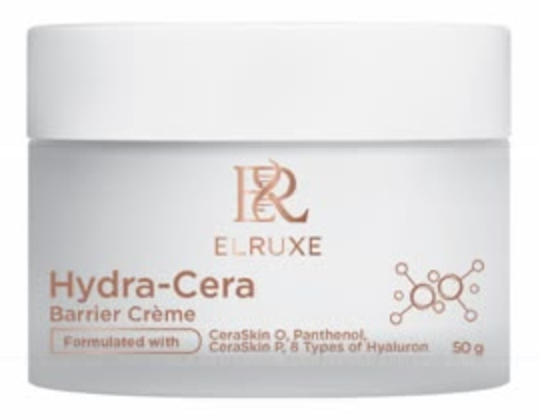
- Seal — massage in Hydra-Cera Barrier Crème.
The takeaway
- PDRN is a DNA-based care ingredient, usually from salmon.
- Pairing it with plant-derived Centella P-PDRN adds calm.
- Exosome technology helps it reach where it's needed.
- Consistency beats complexity — three steps, twice a day.
Our formulas are lightweight and gentle, but we always recommend a patch test before first use.